
Primary Amoebic Meningoencephalitis
About
- Primary Amoebic Meningoencephalitis (PAM) is a rare but highly fatal infection of the brain and spinal cord caused by Naegleria fowleri, a microscopic amoeba commonly called a “brain-eating amoeba.”
Favourable Conditions:
- The amoeba thrives in warm freshwater bodies such as lakes, ponds, rivers, hot springs, and poorly chlorinated swimming pools.
- Climate change, rising temperatures, low water levels, and pollution favour its growth.
Disease Transmission:
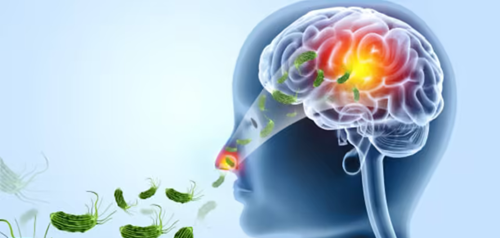
- Naegleria fowleri infects people when water containing the amoeba enters through the nose, travels to the brain, and causes brain tissue damage and swelling. This typically occurs when people swim in warm freshwater bodies.
- The infection does not spread from person to person and is not caused by drinking contaminated water.
Symptoms:
- Early symptoms of PAM include headache, fever, nausea, and vomiting.
- The disease quickly worsens, causing symptoms like a stiff neck, confusion, lack of focus, loss of balance, and hallucinations. It often leads to coma and death.
- These infections, though rare, are fatal and 97% of the patients don’t survive.
Treatment:
- There are no standard treatment methods available to treat PAM.
- Miltefosine, a broad-spectrum antimicrobial drug, Azithromycin and Amphotericin B are some of the medicines currently being utilized to treat the infection.
Why in News?
- Kerala has recently reported several cases of Primary Amoebic Meningoencephalitis (PAM).