
Sarnath recognised as UNESCO World Heritage Site
What is UNESCO’s World Heritage List?
- UNESCO’s World Heritage List designates and protects sites of “outstanding universal value” – culturally or naturally significant places deemed important to all humanity.
- Inscribed under the 1972 World Heritage Convention, these sites, managed by the UNESCO World Heritage Centre, aim to preserve irreplaceable heritage for future generations, transcending national borders.
UNESCO:
- The United Nations Educational, Scientific and Cultural Organization (UNESCO) is a specialized agency of the United Nations (UN) which works to build the conditions for dialogue among civilizations, cultures and peoples, based upon respect for commonly shared values.
- Its purpose is to contribute to peace and security by promoting international collaboration through education, science, and culture.
- UNESCO has more than 190 member countries (including India) and it pursues its objectives through five major programs: education, natural sciences, social and human sciences, culture, and communication and information.
World Heritage Sites in India
Cultural sites (36)
- Agra Fort (1983)
- Ajanta Caves (1983)
- Archaeological Site of Nalanda Mahavihara at Nalanda, Bihar (2016)
- Buddhist Monuments at Sanchi (1989)
- Champaner-Pavagadh Archaeological Park (2004)
- Chhatrapati Shivaji Terminus (formerly Victoria Terminus) (2004)
- Churches and Convents of Goa (1986)
- Dholavira: a Harappan City (2021)
- Elephanta Caves (1987)
- Ellora Caves (1983)
- Fatehpur Sikri (1986)
- Great Living Chola Temples (1987, 2004)
- Group of Monuments at Hampi (1986)
- Group of Monuments at Mahabalipuram (1984)
- Group of Monuments at Pattadakal (1987)
- Hill Forts of Rajasthan (2013)
- Historic City of Ahmadabad (2017)
- Humayun’s Tomb, Delhi (1993)
- Jaipur City, Rajasthan (2019)
- Kakatiya Rudreshwara (Ramappa) Temple, Telangana (2021)
- Khajuraho Group of Monuments (1986)
- Mahabodhi Temple Complex at Bodh Gaya (2002)
- Mountain Railways of India (1999, 2005, 2008)
- Qutb Minar and its Monuments, Delhi (1993)
- Rani-ki-Vav (the Queen’s Stepwell) at Patan, Gujarat (2014)
- Red Fort Complex (2007)
- Rock Shelters of Bhimbetka (2003)
- Sacred Ensembles of the Hoysalas (2023)
- Santiniketan (2023)
- Sun Temple, Konârak (1984)
- Taj Mahal (1983)
- The Architectural Work of Le Corbusier (2016)
- The Jantar Mantar, Jaipur (2010)
- Victorian Gothic and Art Deco Ensembles of Mumbai (2018)
- Moidams of Charaideo in Assam (2024)
- Maratha Military Landscapes (2025)
Natural sites (7)
- Great Himalayan National Park Conservation Area (2014)
- Kaziranga National Park (1985)
- Keoladeo National Park (1985)
- Manas Wildlife Sanctuary (1985)
- Nanda Devi and Valley of Flowers National Parks (1988, 2005)
- Sundarbans National Park (1987)
- Western Ghats (2012)
Mixed site (1)
- Khangchendzonga National Park (2016)
Tentative List of World Heritage
- The Tentative List is an inventory of natural and cultural heritage sites within its territory which a country believes meet the selection criteria and which it intends to nominate for the UNESCO World Heritage status.
- Inclusion in the Tentative List is a prerequisite for any site to be nominated for the prestigious World Heritage List.
Why in News?
- “Ancient Buddhist Site of Sarnath” in Uttar Pradesh has been inscribed on the UNESCO World Heritage List, becoming India’s 45th site to receive this recognition.
- The country now has 45 World Heritage Sites. The last addition was in 2024, with the Maratha Military Landscapes located in Maharashtra and Tamil Nadu.
- India ranks 6th globally and 2nd in Asia Pacific Region for the most number of World Heritage Sites.
- India also has 69 sites in the Tentative List of the World Heritage, which is a mandatory threshold for any site to be considered as a World Heritage property in future.
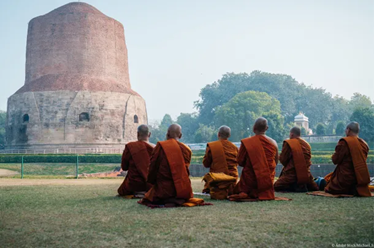
Ancient Buddhist Site of Sarnath
- The inscribed serial property comprises two component parts – Chaukhandi Stupa and the Archaeological Remains of Sarnath (Dhamekh Stupa, Dharmrajika Stupa, Mulagandgakuti Vihara, Ashokan Pillar, etc.) – located within Varanasi in Uttar Pradesh.
- Together these two components preserve the architectural and archaeological remains of the ancient site of Sarnath, known in the Buddhist tradition under different names – Rishipatana, Ishipatana, Mrigadava.
- They all refer to a sacred geography, where the Buddha visited in the 6th century BCE and delivered his first sermon known as the “Turning of the Wheel of the Law” (Dharmachakra pravartana).
- This event marked the inception of the Buddhist sangha and the establishment of the principles of the Noble Eightfold Path.
- Indicated by the Buddha himself to be one of the four key sites of Buddhist pilgrimage, Sarnath developed over centuries through royal, monastic and lay patronage.
- The site is also significant for the discovery of the Ashokan Lion Capital, which was later adopted as the National Emblem of India.
- The archaeological complex preserves remains dating from the pre-Mauryan period (5th–4th century BCE) to the 12th century CE, offering a continuous record of nearly 1,600 years of religious, architectural and cultural development.
- With Sarnath’s inclusion, three of Buddhism’s four most sacred pilgrimage sites—Lumbini in Nepal, the Mahabodhi Temple at Bodh Gaya in Bihar and Sarnath—are now on the UNESCO World Heritage List.