
Makhana
About
- Makhana (commonly known in English as fox nut) is the dried edible seed of the prickly water lily or gorgon plant (Euryale ferox). This plant is found in freshwater ponds throughout South and East Asia.
- The edible part of the Makhana consists of small, round seeds that have an outer layer ranging from black to brown. This has led to it being referred to as the ‘Black Diamond.’
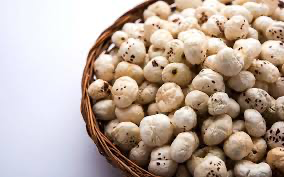
- After processing, these seeds are often consumed as popped snacks known as ‘lava.’ Makhana is highly nutritious and provides an excellent source of carbohydrates, protein, and minerals.
Production in India:
- India is the largest producer of makhana in the world, accounting for nearly 80 per cent of global production.
- Bihar accounts for around 90 per cent of India’s makhana output.
- GI-tagged Mithila Makhana has already been shipped to overseas markets, and the government is promoting consignments to countries including the UAE, the US and other Western markets.
Climatic Conditions for Makhana Cultivation:
- Makhana is an aquatic crop and is mainly grown in tropical and subtropical regions.
- It is traditionally cultivated in stagnant water bodies such as ponds, land depressions, lakes, ditches, or wetlands with shallow water depths of up to 4-6 feet.
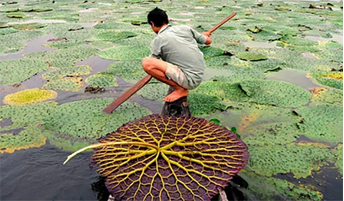
- For optimal growth and development, Makhana requires a temperature range of 20-35°C, relative humidity of 50-90%, and annual rainfall between 100-250 cm.
National Makhana Board
- In 2025, the Government of India established the National Makhana Board in Purnea, Bihar to help scale up production, processing and exports of makhana.
- To support this initiative, the Government has also approved a Central Sector Scheme for Development of Makhana to modernise and expand the makhana sector.
- The scheme, which will run from 2025-26 to 2030-31, aims to develop the entire value chain from farm to export.
- Its primary focus areas include research and innovation, the production of quality seeds, and extensive farmer capacity building.